Quick Answer:
For most Oklahoma homes, a gas furnace is the better long-term choice if you already have natural gas service. Oklahoma natural gas runs roughly $1.00 to $1.15 per therm while electricity through OG&E and PSO averages 11 to 13 cents per kWh, a gap that typically saves gas furnace owners $300 to $500 a year on heating compared to electric resistance heat.
Electric furnaces make sense when there is no gas line to the property, when upfront installation cost is the deciding factor, or when the home will eventually pair the furnace with a heat pump as backup heat rather than relying on electric resistance as the primary heat source.
If you are standing in front of a furnace quote trying to decide between gas and electric, you are asking the right question at the right time. This decision affects your monthly bill for the next 15 to 25 years, and the answer genuinely depends on facts specific to your home: whether gas service already reaches your property, what your local OG&E or PSO electric rate looks like, and how cold your winters actually get in your part of northeast Oklahoma.
Most online guides answer this question with national averages that do not reflect Oklahoma’s specific energy market. Oklahoma sits in a unique position: it produces a large share of the nation’s natural gas, which keeps local gas prices below the national average, while electricity rates through Oklahoma’s major utilities remain moderate compared to coastal states. That combination tilts the math differently here than it does in California or New York, and a generic national comparison will mislead you.
This guide walks through the real numbers for an Oklahoma home, covers what nobody else explains clearly (how Oklahoma’s specific climate zone and utility rate structure change the calculation), and gives you a clear framework to make the right call for your specific house.
Oklahoma Energy Context:
The U.S. Energy Information Administration consistently ranks Oklahoma among the states with below-average residential natural gas prices, a direct result of the state’s position as a major natural gas producer. This regional advantage is the single biggest reason gas furnaces tend to win the long-term cost comparison in Oklahoma more decisively than in many other states.
Table of Contents
- How Each Furnace Type Actually Works
- The Number That Actually Decides This: Cost Per Unit of Heat Delivered
- Side-by-Side Comparison for Oklahoma Homeowners
- What Most Guides Get Wrong About Oklahoma Specifically
- Installation Cost Breakdown for Oklahoma
- When Electric Is Genuinely the Better Choice in Oklahoma
- When Gas Is the Clear Choice in Oklahoma
- Lifespan and Maintenance: The Long-Term Picture
- A Practical Decision Framework
- Final Thoughts
- Frequently Asked Questions
- Related Posts You May Find Helpful
How Each Furnace Type Actually Works
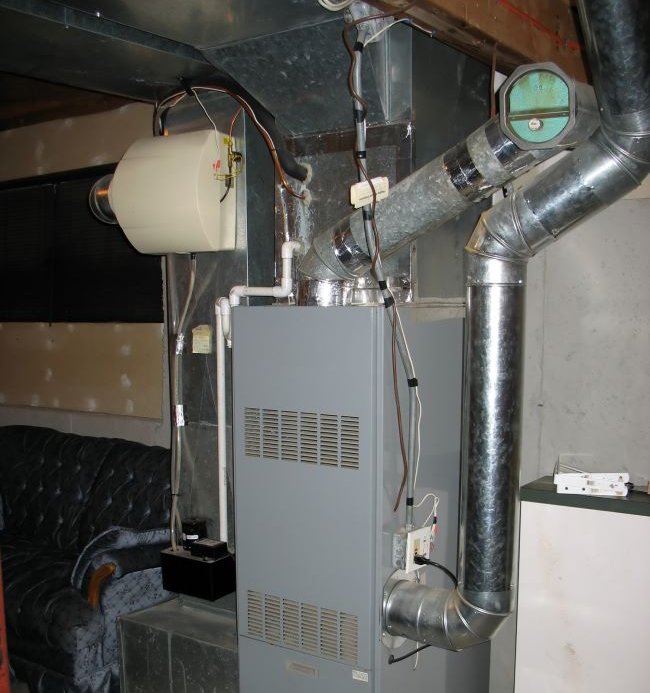
Gas Furnaces
A gas furnace burns natural gas (or propane in rural areas without gas service) in a sealed combustion chamber. The heat from that combustion warms a metal heat exchanger, and a blower fan pushes household air across the hot exchanger before sending it through your ductwork. Combustion byproducts are vented safely outside through a flue. Modern gas furnaces reach 80 to 98 percent AFUE (Annual Fuel Utilization Efficiency), meaning 80 to 98 percent of the fuel’s energy converts to usable heat.
Electric Furnaces
An electric furnace uses resistance heating elements, essentially large-scale versions of the coils in a toaster. Electrical current passes through the elements, heating them, and a blower fan pushes air across the hot coils into your ductwork. There is no combustion, no flue, and no gas line required. Electric furnaces convert nearly 100 percent of the electricity they consume into heat at the point of use, which is why their AFUE rating approaches 100 percent.
That near-perfect efficiency number is the source of most of the confusion in this comparison. AFUE measures only what happens inside the furnace cabinet. It says nothing about what each unit of fuel actually costs you, which is the number that determines your monthly bill.
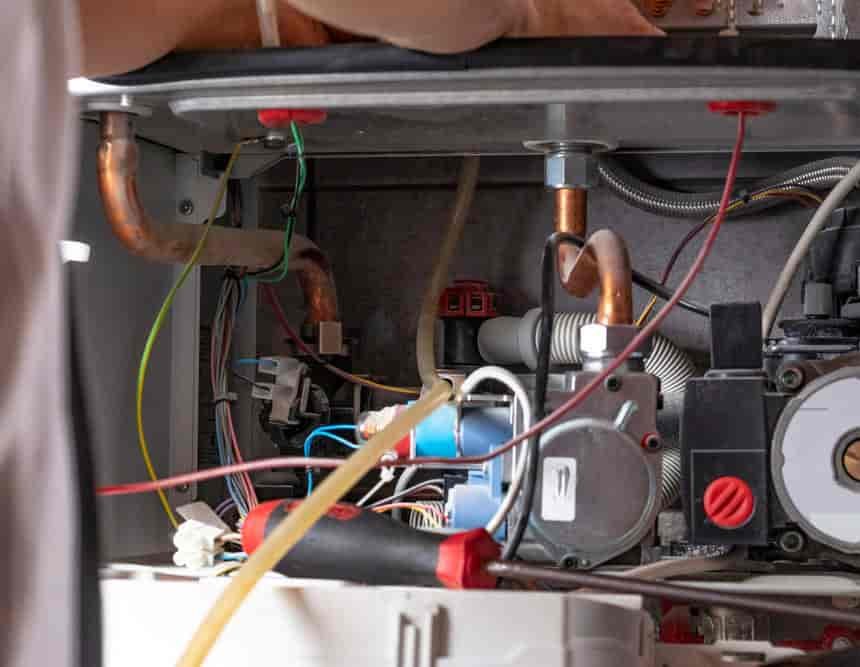
The Number That Actually Decides This: Cost Per Unit of Heat Delivered
Efficiency ratings are nearly meaningless without pairing them against local fuel prices. Here is the comparison that matters, using Oklahoma-specific rates:
| Metric | Gas Furnace (96% AFUE) | Electric Furnace (100% AFUE) |
| Typical Oklahoma fuel rate | $1.00 to $1.15 per therm | 11 to 13 cents per kWh (OG&E/PSO) |
| Energy content per unit | 100,000 BTU per therm | 3,412 BTU per kWh |
| Cost per 100,000 BTU delivered | Approx. $1.04 to $1.20 | Approx. $3.22 to $3.81 |
| Typical annual heating cost (avg. OK home) | $500 to $700 | $1,000 to $1,500 |
At Oklahoma’s current rates, electric resistance heat costs roughly three times more per unit of delivered heat than gas, even though the electric furnace itself is technically “more efficient” on paper. This is the single most important fact in this entire comparison and the one most national guides gloss over without applying real local rates.
Side-by-Side Comparison for Oklahoma Homeowners
| Gas Furnace | Electric Furnace |
| Typical install cost: $2,800 to $7,000 | Typical install cost: $1,600 to $4,000 |
| Annual operating cost in OK: $500 to $700 | Annual operating cost in OK: $1,000 to $1,500 |
| Requires gas line, venting, combustion safety | No gas line, no venting, simpler electrical install |
| Lifespan: 15 to 20 years | Lifespan: 20 to 30 years |
| Faster heat recovery, higher supply air temp (120-140°F) | Slower heat recovery, lower supply air temp (~100-110°F) |
| Requires annual combustion safety inspection | Minimal maintenance beyond filter changes |
| Carbon monoxide risk if heat exchanger fails | Zero combustion risk, no CO concern |
| Better for Oklahoma’s coldest snaps and large homes | Fine for mild winters or smaller, well-insulated homes |
| Best when gas service already exists at the property | Best when there is no gas line or as heat pump backup |
What Most Guides Get Wrong About Oklahoma Specifically
1. Oklahoma Has Two Major Utilities With Different Rate Structures
Most national comparisons use a single blended national electricity rate. Oklahoma homeowners are served primarily by OG&E or PSO depending on location, and each utility has its own rate schedule, time-of-use options, and seasonal adjustment factors. Claremore and much of the Tulsa metro area fall within PSO territory, while parts of central and western Oklahoma are served by OG&E. Before trusting any cost comparison, including this one, check your most recent bill for your actual cost per kWh, since rates can shift year to year with fuel adjustment clauses.
2. Oklahoma Winters Are Variable, Not Uniformly Mild
Generic guides often categorize the entire South as having mild winters where electric heat performs fine. That is an oversimplification for Oklahoma specifically. Northeast Oklahoma, including Claremore and Tulsa, averages 3,500 to 4,000 heating degree days annually and has experienced genuine extreme cold events, most notably the February 2021 winter storm that brought sustained sub-zero temperatures for multiple consecutive days statewide. A gas furnace’s ability to deliver consistent high-output heat during those rare but real extreme events is a meaningful safety consideration that a “mild Southern climate” framing misses entirely.
3. The Propane Alternative Nobody Mentions
A significant share of homes in rural northeast Oklahoma, particularly in Rogers, Mayes, and Craig counties around Claremore, do not have access to natural gas utility lines at all. For these homes, the real choice is not gas versus electric. It is propane versus electric, since a propane furnace operates almost identically to a natural gas furnace but uses a different fuel stored in an on-site tank. Propane prices fluctuate more than utility gas and typically run $2.00 to $3.50 per gallon in Oklahoma, with each gallon delivering about 91,500 BTU. Rural Oklahoma homeowners comparing furnace types should run the propane-specific cost math rather than assuming standard natural gas pricing applies.
4. Electrical Panel Capacity Is a Hidden Cost Most Quotes Skip
A larger electric furnace, particularly in a home 2,000 square feet or more, often draws 60 to 100 amps just for the heating elements. Many older Claremore and Tulsa-area homes have 100 or 150 amp main panels that are already near capacity with central air, water heater, and other major appliances. Before committing to an electric furnace replacement, have a licensed electrician confirm your panel has the spare capacity. A panel upgrade adds $1,500 to $4,000 to the project, a cost that often goes unmentioned in furnace-only price comparisons and can erase the upfront savings electric furnaces are supposed to offer.
Field Insight:
Rescue Heat and Air sees electric furnace panel capacity issues most often in homes built before 1995 in the Claremore and surrounding rural areas, where original electrical service was sized for a smaller, less electrified household. Always verify panel capacity before finalizing an electric furnace decision based purely on the unit price.
Installation Cost Breakdown for Oklahoma
| Cost Component | Gas Furnace | Electric Furnace |
| Equipment (mid-efficiency) | $1,200 to $3,000 | $800 to $2,000 |
| Labor and installation | $1,000 to $2,500 | $600 to $1,500 |
| Venting (if needed) | $300 to $1,200 | Not applicable |
| Gas line extension (if needed) | $500 to $2,000 | Not applicable |
| Electrical panel upgrade (if needed) | Not applicable | $1,500 to $4,000 |
| Typical total installed cost | $2,800 to $7,000 | $1,600 to $4,000 (more if panel upgrade needed) |
Electric furnaces generally win on upfront installation cost, sometimes by a wide margin, which is exactly why they appeal to homeowners managing a tight renovation budget or a rental property. The catch is that the math flips within three to five years once Oklahoma’s gas-versus-electric operating cost gap is factored in, and over a 15-year furnace lifespan, gas typically saves $4,500 to $7,500 in cumulative energy costs at current Oklahoma rates.
When Electric Is Genuinely the Better Choice in Oklahoma
- No natural gas line exists at the property: Running a new gas line to a rural property can cost $3,000 to $15,000 or more depending on distance from the main, often making electric the more practical choice despite higher operating costs.
- Small, well-insulated home: A tight, well-sealed home under 1,200 square feet has a smaller heating load, which narrows the dollar gap between gas and electric operating costs.
- Pairing with a heat pump: An electric furnace installed as backup heat behind a heat pump only runs during the coldest stretches of the year, dramatically reducing the hours it operates and minimizing the rate disadvantage. This dual-fuel-style setup, sometimes called a heat pump with electric strip backup, is common in new Oklahoma construction.
- Short-term ownership plans: If you plan to sell within a few years, the lower upfront cost of electric may outweigh operating cost concerns you will not be around to pay.
- Solar panel ownership: Homeowners with solar panels that offset electricity costs change this calculation substantially, since the cost-per-BTU disadvantage of electric heat shrinks or disappears when the electricity itself is largely free.
When Gas Is the Clear Choice in Oklahoma
- Gas line already serves the property: If you are simply replacing an existing gas furnace, there is rarely a financial reason to switch to electric. You already have the infrastructure that makes gas the cheaper fuel to operate.
- Larger or older, less-insulated home: Bigger heating loads amplify the per-unit cost gap between gas and electric, making the savings from gas more significant in dollar terms.
- You want the fastest possible heat recovery: Gas furnaces deliver air at 120 to 140 degrees Fahrenheit versus roughly 100 to 110 degrees for electric, meaning gas furnaces warm a cold house faster after a deep overnight setback.
- Long-term ownership: If you plan to stay in the home 7 or more years, the operating cost savings from gas typically exceed the higher upfront installation cost.
Not Sure Which Furnace Type Fits Your Oklahoma Home?
Every home is different, and the right answer depends on your existing gas access, your electrical panel, your insulation, and your budget. Rescue Heat and Air will run the actual numbers for your specific Claremore, Tulsa, or northeast Oklahoma property and give you an honest recommendation, not a sales pitch toward whichever unit we have on the truck.
Lifespan and Maintenance: The Long-Term Picture
Electric furnaces typically outlast gas furnaces by 5 to 10 years because they have far fewer moving parts and no combustion-related wear. There is no heat exchanger to crack, no burner assembly to clean, and no flue to inspect. A well-maintained electric furnace can run 20 to 30 years, while gas furnaces typically last 15 to 20 years before the heat exchanger or other major components reach end of life.
Gas furnaces require more involved annual maintenance, including burner cleaning, heat exchanger inspection, flame sensor testing, and gas pressure verification, all of which protect against the carbon monoxide risk that comes with any combustion appliance. Electric furnace maintenance is largely limited to filter changes and periodic checks of the heating element connections and blower motor. Rescue Heat and Air covers both furnace types as part of our heating maintenance services, with service plans tailored to whichever system your home runs.
A Practical Decision Framework
If you are still unsure after reading the comparisons above, work through these three questions in order:
- Does natural gas service already reach your property? If yes, the cost math strongly favors staying with gas for a replacement. If no, the cost of running a new gas line usually tips the scale toward electric or propane.
- Is your electrical panel adequate, or does an electric furnace require an upgrade? If a panel upgrade is required, add that cost to the electric furnace total before comparing it against a gas furnace quote.
- How long do you plan to own this home? Under 5 years, weigh upfront cost more heavily. Over 7 years, weigh operating cost more heavily, since Oklahoma’s gas-versus-electric rate gap compounds significantly over a decade or more.
Final Thoughts
For the overwhelming majority of Oklahoma homes that already have natural gas service, a gas furnace remains the financially smarter choice thanks to the state’s below-average natural gas pricing relative to electricity. Electric furnaces earn their place in specific situations: properties without gas access, smaller and well-insulated homes, heat pump backup configurations, and short-term ownership scenarios where upfront cost outweighs long-term operating savings.
The right answer is never purely theoretical. It depends on your actual gas access, your actual electric rate, and your actual home’s heating load. For more on related decisions, see our guide on heat pump vs. furnace for Oklahoma homes, which covers a third option worth considering for many Oklahoma properties.
Frequently Asked Questions
Is it cheaper to heat with gas or electric in Oklahoma?
Gas is almost always cheaper to operate in Oklahoma. At current rates of roughly $1.00 to $1.15 per therm for natural gas versus 11 to 13 cents per kWh for electricity, gas delivers heat at about one-third the cost per BTU compared to electric resistance heating.
How much does it cost to convert from electric to gas heat in Oklahoma?
A full conversion, including a new gas furnace, gas line extension if needed, and venting, typically runs $4,000 to $9,000 depending on how far the gas line must travel and whether existing ductwork is reused. Homes already on a gas meter for cooking or water heating usually have a much lower conversion cost since the main gas service is already established.
Can an electric furnace keep up during an Oklahoma cold snap?
A properly sized electric furnace will keep a home warm, but it draws significantly more amperage during extreme cold and operates with a noticeably lower supply air temperature than gas. During events like the February 2021 winter storm, homes with electric furnaces also faced the compounding risk of grid strain during the coldest hours, a risk gas furnace owners did not share for their heating fuel specifically.
Do electric furnaces need a chimney or venting?
No. Electric furnaces produce no combustion byproducts, so there is no flue, chimney, or venting requirement. This is one of the reasons electric furnace installation costs less and can simplify a retrofit in a home without existing venting infrastructure.
Is propane a better option than electric for rural Oklahoma homes?
Often yes. Propane furnaces operate like natural gas furnaces and deliver the same fast, high-temperature heat. While propane costs more per gallon than utility natural gas, it is still frequently cheaper per BTU than electric resistance heat, making it worth comparing directly against electric for rural properties without a gas utility line.
Which lasts longer, a gas or electric furnace?
Electric furnaces typically last 20 to 30 years, about 5 to 10 years longer than gas furnaces, which average 15 to 20 years. The difference comes from the absence of combustion-related wear and the simpler mechanical design of electric units.
Related Posts You May Find Helpful
These resources connect directly to the furnace decision for Oklahoma homeowners.
- Heat Pump vs. Furnace: Which Is Right for an Oklahoma Home?
A heat pump offers a third path between gas and electric resistance heat, often delivering the lowest operating cost of all three options in Oklahoma’s moderate climate. This guide compares heat pumps against traditional furnaces in detail. - How Much Does HVAC Installation Cost in Oklahoma?
Whether you choose gas or electric, this guide gives you the full picture of what a complete HVAC system replacement costs in Claremore, Tulsa, and northeast Oklahoma in 2025, broken down by home size and equipment type. - Common Heating Issues in Fall and How to Fix Them
Regardless of fuel type, every furnace needs attention before winter. This guide covers the most common heating failures Oklahoma homeowners experience in fall and how to address them. - Furnace Short Cycling: Causes & Fixes
Short cycling affects gas and electric furnaces differently. This guide breaks down the causes specific to each furnace type and what the fix looks like for your system. - Fall HVAC Maintenance Checklist for Oklahoma
Gas and electric furnaces have different maintenance needs heading into winter. This checklist covers what every Oklahoma homeowner should do each fall, with notes on what changes based on your furnace type.