Most homes do not need air duct cleaning on a fixed schedule. The EPA takes a conservative position, recommending cleaning only when there’s visible mold, a pest infestation, or debris actually blocking airflow, while the duct cleaning industry’s trade group, NADCA, recommends a more proactive every 3 to 5 years for general upkeep. Both positions have merit, and the honest answer depends on your specific home. This guide walks through the real warning signs, what a proper cleaning actually involves, what it costs, and how to avoid the bait-pricing scams that give this industry a bad name.
Table of Contents
Why There’s No Single Right Answer
The EPA’s official position is that duct cleaning has not been shown to prevent health problems in most homes, and it recommends cleaning on an as-needed basis rather than a fixed schedule, specifically when there’s visible mold growth inside the ducts or on other HVAC components, an infestation of insects or rodents, or ducts clogged with enough debris that particles are visibly release into the home.
NADCA, the National Air Duct Cleaners Association, takes a more proactive position: cleaning every 3 to 5 years for a typical home, and every 2 to 3 years for homes with pets, allergy sufferers, smokers, or recent renovation dust. It’s worth being upfront that NADCA represents the companies that perform this work, so its guidance leans more frequent than the EPA’s. The most honest way to think about it: the EPA sets the floor (clean it when there’s a real problem), and NADCA offers a reasonable proactive ceiling for households with elevated dust, allergies, or pets. Most homes fall somewhere in between, and the signs below matter more than either recommendation on its own.
Not Sure If Your Ducts Need Attention?
Call us for a straightforward assessment, no pressure to book a service you don’t need.
Signs Your Ducts Actually Need Cleaning
| What You’re Noticing | What It Suggests |
| Dust resettles quickly after cleaning surfaces | Buildup inside the ductwork is continuously redistributing dust through the home |
| Allergy or respiratory symptoms are worse at home than elsewhere | Circulating dust, dander, or mold spores may be contributing |
| Visible mold near vents or registers | Possible moisture problem inside the duct system, worth addressing directly |
| A musty smell when the system first kicks on | Moisture or mold buildup, especially common after long idle periods |
| Recent renovation or new construction | Drywall dust and debris commonly enter the duct system during work |
| Evidence of pests in or near vents | Rodents or insects can leave debris and contamination that warrants cleaning |
A little dust on a vent cover is normal and does not, by itself, mean you need whole-system cleaning. These signs point to an actual problem inside the ductwork, not just surface dust.
What a Proper Duct Cleaning Actually Involves
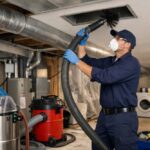
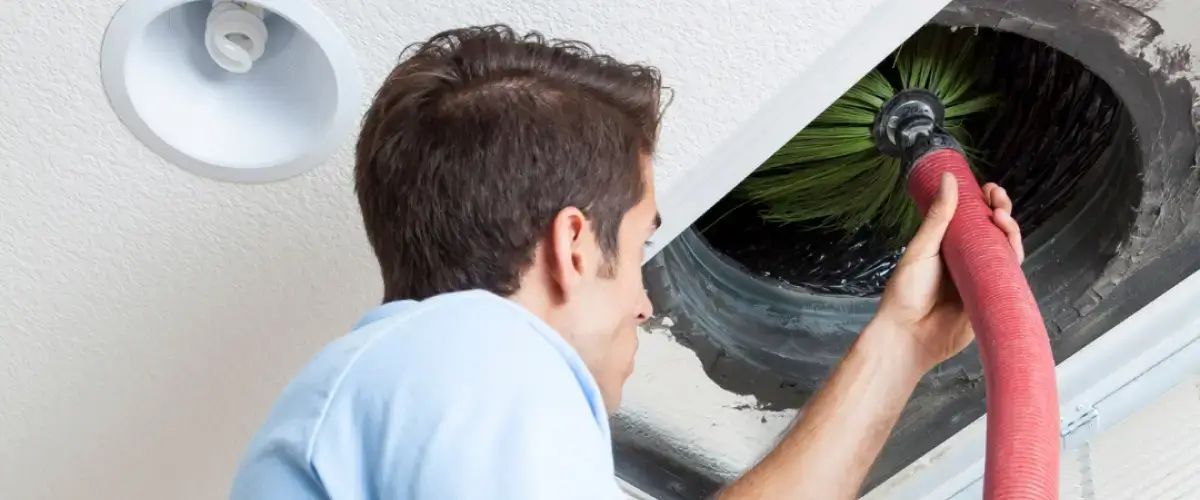
Industry standards call for a whole-system approach, not just running a vacuum hose into a few vents. A proper job covers the supply and return ducts, the air handler, blower motor, coils, and drain pan. Cleaning only the accessible sections while leaving the blower or coils untouched can actually make things worse, since the next time the system runs, it redistributes contamination right back through the newly cleaned ducts.
The accepted method combines negative pressure (a powerful vacuum sealed to the system to contain loosened debris) with source removal (physically dislodging buildup with brushes or agitation tools) rather than just blowing air through the ducts and hoping dust ends up somewhere useful.
Get a Real Assessment, Not a Sales Pitch
We’ll tell you honestly whether your ducts need cleaning or whether your money’s better spent elsewhere.
How to Avoid Duct Cleaning Scams
- Be skeptical of bait pricing: ads offering whole-house duct cleaning for $49 to $99 almost always mean an incomplete job or aggressive upselling once the technician is inside your home
- A proper job for an average home takes several hours, not 45 minutes
- Ask whether the service covers the full system (supply, return, air handler, coils) or just the visible ductwork
- Look for NADCA-certified technicians, though certification alone doesn’t guarantee quality, so ask specifically what the visit includes
What Air Duct Cleaning Costs
Pricing varies with the size of your home, the number of vents and return registers, and how accessible your ductwork is. Be wary of any quote far below the market range, since it usually signals a partial job rather than genuine savings. Call our office and we can walk through what a proper assessment and cleaning would look like for your specific home.
Breathe Easier Without the Upsell
Call for an honest read on whether your ducts need attention.
Duct Cleaning as Part of Regular Maintenance in Oklahoma
For most Claremore and Tulsa-area homes, duct cleaning and sealing is already built into our seasonal maintenance visits rather than needing to be booked as a separate service. See our heating maintenance and AC maintenance pages for what’s included. If you’re noticing the specific warning signs above, a standalone assessment makes sense before your next scheduled visit.
Frequently Asked Questions
How often should air ducts be cleaned?
There’s no single fixed answer. The EPA recommends cleaning only when there’s visible mold, a pest infestation, or heavy debris blocking airflow. The industry group NADCA recommends every 3 to 5 years for general upkeep, or every 2 to 3 years for homes with pets, allergy sufferers, or recent renovations. The specific warning signs matter more than either number alone.
Is duct cleaning worth it?
It depends on your home. If you’re seeing real warning signs like heavy dust resettling quickly, worsening allergy symptoms at home, visible mold, or a musty smell, it’s usually worth it. If there are no symptoms and no recent renovation or pest issue, an EPA-recommended “as needed” approach may mean you don’t need it right now.
How much does air duct cleaning cost?
Cost depends on your home’s size, the number of vents, and ductwork accessibility. Be cautious of prices dramatically below market rate, which usually signal an incomplete job rather than a deal.
What’s included in a proper duct cleaning?
A whole-system approach: supply and return ducts, the air handler, blower motor, coils, and drain pan, using negative pressure vacuum equipment combined with physical agitation to remove debris, not just a quick pass with a shop vac.
Are duct cleaning ads offering $49 or $99 whole-house cleaning legitimate?
Almost never. A legitimate whole-system cleaning for an average home takes several hours and can’t be done profitably at that price. These offers typically involve an incomplete job or heavy upselling once the technician is in your home.
Does duct cleaning help with allergies?
It may help reduce airborne contaminants in homes where dust, pet dander, or mold has built up inside the ductwork, but it isn’t a guaranteed cure for allergies and shouldn’t be sold as one.
Is air duct cleaning the same as dryer vent cleaning?
No, they’re different systems. Dryer vent cleaning addresses lint buildup in your dryer’s exhaust line, which is a fire-safety issue, while air duct cleaning addresses your home’s HVAC ductwork. We offer both; see our guide on dryer vent cleaning for that topic specifically.
Related Reading
- What’s included in a seasonal visit: Heating Maintenance Services and AC Maintenance Services
- A related but different system: Do HVAC Companies Clean Dryer Vents?
- System not performing well: Heating Repair Services or AC Repair Services
An Honest Answer, Not a Hard Sell
Call us and we’ll tell you straight whether duct cleaning makes sense for your home.