Oklahoma fall weather is notoriously unpredictable. Temperatures can drop from 80 degrees to below freezing in a matter of days. Completing this checklist before that first cold night means your heating system is ready when you need it, not scrambling to diagnose a failure when every HVAC technician in Claremore and Tulsa is already booked with emergency calls.
Fall is the second-most important season for HVAC maintenance in Oklahoma. Summer ends abruptly, and the system that has been working its hardest for the past five months cooling your home now needs to transition into heating mode, often with very little notice. A furnace that has been sitting idle since March has had months to accumulate dust on the burners, oxidize the igniter, and develop issues that will only reveal themselves the first time you call for heat.
This checklist is organized into what you can do yourself, what requires a professional, and the timing that makes each task most effective. Work through it systematically in September or early October and you will head into Oklahoma winter with confidence in your system rather than anxiety about whether it is going to perform.
Oklahoma Climate Reminder:
The Claremore and Tulsa area averages 3,500 to 4,000 heating degree days annually, according to the Oklahoma Climatological Survey. The region is also prone to rapid-onset cold snaps, including the February 2021 winter storm that brought temperatures below zero Fahrenheit for multiple consecutive days. Fall preparation is the only reliable protection against being caught unprepared.
Table of Contents
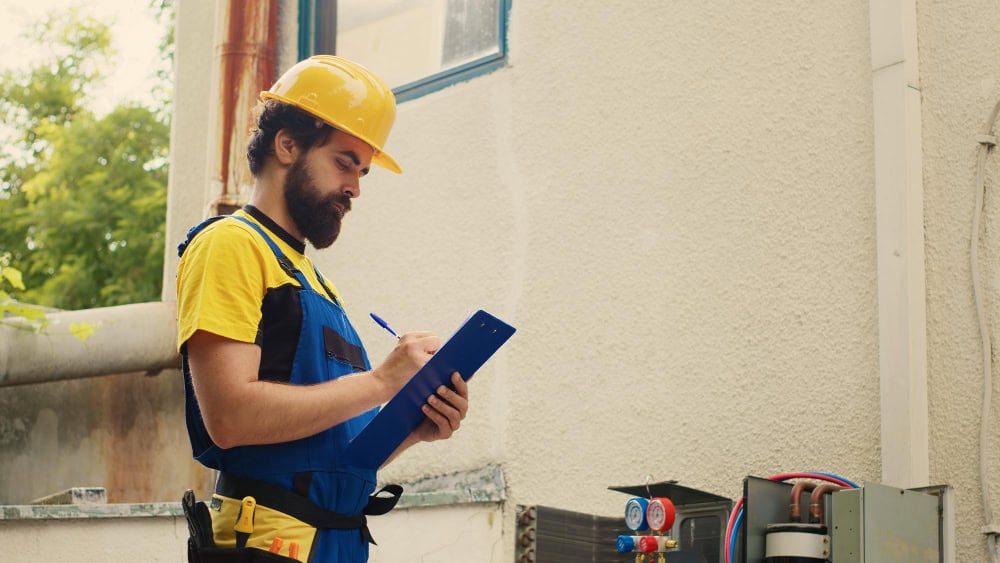
Part 1: DIY Tasks You Can Complete This Weekend
1. Replace the Air Filter
The air filter is the single most impactful and most neglected maintenance task for any HVAC system. A dirty filter restricts airflow across the heat exchanger, forces the furnace to overheat and cycle on the high-limit switch, and can cause the system to blow cold air despite running continuously. In Oklahoma’s dusty fall environment, a filter that made it through summer may already be at or near its useful end.
Replace your filter at the start of fall maintenance regardless of how it looks. For a 1-inch pleated filter, plan to replace every 60 days through the heating season. For a 4 to 5-inch media filter, a fall replacement should carry you through most or all of winter. For a full guide to choosing the right filter type and MERV rating, read our HVAC Filter Guide: Types, Ratings & How Often to Change.
2. Test the Thermostat in Heat Mode
Do not wait for the first genuinely cold night to discover your thermostat is not calling for heat correctly. Set it to HEAT mode, raise the set point above the current room temperature, and confirm that the furnace starts within a few minutes and delivers warm air from the vents within 5 to 10 minutes of startup.
- Confirm the thermostat is set to HEAT, not COOL or AUTO
- Verify the fan setting is on AUTO rather than ON (ON runs the fan continuously regardless of whether the system is heating)
- Hold a separate thermometer near the thermostat and compare readings. A discrepancy of more than 2 to 3 degrees suggests calibration drift
- If you have a smart thermostat, confirm it has transitioned to the fall or winter schedule and that the programming reflects your actual occupancy patterns
3. Replace Carbon Monoxide Detector Batteries
Carbon monoxide is the most serious safety risk associated with gas furnace operation. It is odorless and colorless, produced by incomplete combustion, and a furnace with a cracked heat exchanger or blocked flue can expose your household to dangerous concentrations without any warning other than a working CO detector.
Replace batteries in all CO detectors at the start of every heating season. If any detector is more than five years old, replace the entire unit. The electrochemical sensor inside CO detectors degrades over time and an old unit may not reliably detect a hazard. Every Oklahoma home with a gas furnace needs working CO detectors on every floor, particularly near sleeping areas.
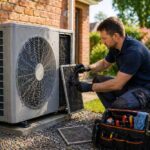
4. Clear Debris from the Outdoor Unit
Oklahoma’s summer heat bakes leaves, cottonwood, grass clippings, and other debris into the condenser coil fins. Even though the cooling season is over, the outdoor unit still needs to be clear for a heat pump system and should be prepped for winter regardless of system type.
- Clear all vegetation, leaves, and debris from around the unit. Maintain at least 18 inches of clearance on all sides
- Gently rinse the condenser fins with a garden hose from the inside out if they are visibly dirty. Do not use a pressure washer
- Inspect the fins for physical damage from summer hail. Bent fins reduce airflow efficiency and can be straightened with a fin comb
- If your unit is in an area prone to leaf accumulation from nearby trees, consider a breathable top cover for winter. Never use an airtight cover, as trapped moisture creates corrosion and a habitat for rodents
5. Check All Supply and Return Vents
Walk every room of your home and confirm that all supply registers and return air grilles are open and unobstructed. Furniture moved over summer, area rugs laid over floor registers, and items stored near return air vents are among the most common causes of uneven heating and system overworking in fall.
A common misconception is that closing vents in unused rooms saves energy. It does not. Closed vents create pressure imbalances in the duct system, force the furnace to work harder against increased resistance, and can cause components to overheat. All vents should remain open throughout the heating season.
6. Inspect the Furnace Flue and Exhaust Pipes
The furnace exhaust flue vents combustion gases safely out of the home. During summer, bird nests, wasp nests, and debris can partially or completely block the flue, creating a dangerous situation when the furnace fires for the first time in fall.
For high-efficiency furnaces with PVC exhaust pipes that terminate at an exterior wall, inspect the pipe opening for insect nests, debris, or damage. For older furnaces with metal flue pipes running to the roof, visually check the flue from outside if safely accessible. A blocked or damaged flue is a professional repair, not a DIY fix.
7. Inspect and Clear the Condensate Drain
Even though the AC is winding down for the season, the condensate drain line still holds residual moisture from summer operation. Algae and mold that grew in the drain during the humid cooling season can create a clog that causes water backup and overflow when the heating season begins, particularly in heat pump systems that produce condensate during heating mode.
Pour a cup of white vinegar or a condensate treatment tablet down the drain access port. For systems with a float switch on the condensate pan, test it by briefly pouring a small amount of water into the pan and confirming the system shuts off as designed.
8. Check Weather Stripping and Insulation
Your HVAC system heats the building envelope, not the outdoors. Every gap in weather stripping around doors and windows, every uninsulated exterior wall penetration, and every unsealed attic hatch is a place where the heat your furnace produces escapes and your energy dollars follow it. Fall is the right time to walk the perimeter of your home, identify gaps, and seal them before heating season.
This is particularly relevant in older Claremore-area homes, where insulation standards from original construction may be well below modern requirements. Improving insulation and air sealing reduces the load on your furnace, extends its lifespan, and lowers monthly heating bills.
Part 2: What to Leave for a Licensed HVAC Professional
Annual Heating System Tune-Up
A professional fall heating tune-up is not optional maintenance for a well-functioning system. It is the most reliable way to catch the developing problems that become expensive failures in January. A comprehensive professional tune-up from Rescue Heat and Air includes:
- Burner cleaning and inspection: Dirty burners reduce combustion efficiency and can cause delayed ignition, which stresses the heat exchanger with every startup cycle
- Heat exchanger inspection: A cracked heat exchanger is a carbon monoxide risk. Professional inspection using combustion analyzers and camera tools identifies cracks that are invisible to the naked eye from outside the unit
- Igniter and flame sensor testing: Both components degrade over time. A flame sensor coated with oxidation will cause the system to lock out after ignition. An igniter near the end of its life will cause intermittent startup failures
- Gas pressure verification: Incorrect gas pressure at the furnace results in incomplete combustion, poor efficiency, and accelerated heat exchanger wear
- Flue and venting inspection: Confirms combustion gases are safely exhausted and that no blockages or deterioration has developed in the venting system
- Electrical component testing: Capacitors, contactors, and control board connections are checked for signs of wear or degradation
- Blower motor inspection and lubrication: A failing blower bearing produces no heating or cooling regardless of how well the rest of the system functions
- Thermostat calibration verification: Confirms the thermostat is accurately reading room temperature and properly communicating with the system controls
Industry Data:
HVAC systems that receive annual professional maintenance use 15 to 25 percent less energy than neglected systems and last 5 to 10 years longer, according to the Air Conditioning Contractors of America. In Oklahoma’s extreme climate, where systems run hard in both summer and winter, consistent annual maintenance is even more impactful than the national average suggests.
Schedule your fall heating tune-up in September or early October. By mid-October, HVAC companies in Claremore, Tulsa, and across northeast Oklahoma begin seeing heavy demand as the first cold snaps arrive and homeowners discover their systems are not functioning. Scheduling early guarantees your preferred time slot and ensures problems are addressed before they become emergency calls.
Rescue Heat and Air offers comprehensive heating maintenance services covering all of the above and more. Our NATE-certified technicians work on all major furnace and heat pump brands and provide honest, no-pressure assessments of system condition.
Fall HVAC Maintenance Checklist: At-a-Glance
| Task | DIY or Pro? | Best Timing | Priority |
| Replace air filter | DIY | September | High |
| Test thermostat in heat mode | DIY | September | High |
| Replace CO detector batteries | DIY | September | High |
| Clear outdoor unit of debris | DIY | September to October | High |
| Check and open all vents and registers | DIY | September | Medium |
| Inspect furnace flue and exhaust pipes | DIY (visual) | September | High |
| Clear condensate drain | DIY | September | Medium |
| Check weather stripping and insulation | DIY | September to October | Medium |
| Annual professional heating tune-up | Professional | September to October | Critical |
| Heat exchanger inspection | Professional | During tune-up | Critical |
| Gas pressure verification | Professional | During tune-up | High |
| Electrical component testing | Professional | During tune-up | High |
| Ductwork inspection and sealing | Professional | As needed | Medium |
Oklahoma-Specific Fall Considerations
Preparing for Sudden Cold Snaps
Oklahoma fall temperatures are highly variable. The state regularly experiences warm stretches well into October followed by rapid drops of 30 to 40 degrees in 24 to 48 hours. These sudden transitions are the conditions under which unprepared heating systems reveal their failures most dramatically. Completing the checklist in September gives you a buffer before the first serious cold event arrives.
Heat Pump Owners: Additional Checks
Heat pumps serve as both cooling and heating systems, which means they need fall preparation that accounts for the transition between modes. In addition to the standard checklist above, heat pump owners should:
- Confirm the system switches correctly to heat mode and delivers warm air at the vents
- Verify the defrost cycle is functioning, as heat pumps periodically run a defrost cycle in cold weather and a system that stays in defrost continuously indicates a problem
- Confirm the auxiliary or emergency heat strips are functioning, as these provide backup heat when outdoor temperatures drop below the heat pump’s effective range
- Check that the outdoor unit is level and that the base pan is free of debris that could interfere with drainage during the defrost cycle
Rural Properties and Propane Systems
Oklahoma homeowners in rural areas outside the natural gas service territory who use propane for heating should schedule a propane tank inspection and fill in early fall before peak demand drives up propane prices and delivery wait times. Propane prices typically rise 20 to 40 percent from fall into peak winter as demand increases. Filling in September consistently saves money compared to emergency fills in January.
Schedule Your Fall Heating Tune-Up Before October
Rescue Heat and Air serves Claremore, Tulsa, Broken Arrow, Owasso, Catoosa, Pryor, Collinsville, and all of northeast Oklahoma. Our NATE-certified technicians complete comprehensive fall heating tune-ups that check every critical component before Oklahoma winter arrives. Scheduling fills up fast once cold weather hits. Book your appointment today.
Final Thoughts
The Oklahoma homeowners who avoid emergency no-heat calls in December and January are overwhelmingly the ones who completed their fall maintenance in September and October. The checklist above covers everything needed to give your heating system the best possible foundation for the season. The DIY tasks take a few hours over a weekend. The professional tune-up takes a few more hours and catches everything the DIY inspection cannot reach.
For complete year-round HVAC coverage, pair this checklist with our guide on how to prep your AC for an Oklahoma summer, and bookmark our guide on common heating issues in fall and how to fix them so you know exactly what to do if something does go wrong after the season begins.
Related Posts You May Find Helpful
These resources from Rescue Heat and Air round out the complete fall and winter HVAC preparation picture for Oklahoma homeowners.
- Common Heating Issues in Fall and How to Fix Them
Even with a thorough fall maintenance routine, furnace problems can still appear. This guide covers the eight most common heating failures Oklahoma homeowners experience in October and November, with clear guidance on what you can fix yourself and what requires a technician. - HVAC Filter Guide: Types, Ratings & How Often to Change
Filter replacement is the first task on this checklist for good reason. This complete guide covers every filter type, explains MERV, MPR, and FPR ratings, and gives Oklahoma-specific guidance on replacement frequency based on your household conditions. - How Long Does an HVAC Repair Take?
If your fall maintenance inspection reveals a problem that needs professional repair, this guide tells you exactly how long each common repair type takes and what factors affect the timeline, so you can plan accordingly. - How to Prep Your AC for a Hot Oklahoma Summer
The companion guide to this checklist for the cooling season. A thorough spring AC preparation is the other half of the annual maintenance routine that keeps your system running reliably year-round. - Heating System Installation in Claremore
If your fall tune-up reveals a heating system that is past the point of cost-effective repair, this page covers what a professional furnace or heat pump installation from Rescue Heat and Air looks like from assessment through completion.