The Short Answer:
Start your AC prep in March or April before temperatures climb. Change your air filter, clean the outdoor unit, check refrigerant levels, test your thermostat, and schedule a professional AC tune-up. Oklahoma summers average 95-100+ degrees for weeks at a time, and an unprepared system can fail when you need it most.
Oklahoma summers are not a suggestion. They are a sustained, sweltering test of every mechanical system in your home. Temperatures in Claremore, Tulsa, and across northeast Oklahoma regularly exceed 100 degrees Fahrenheit from June through August, and the humidity makes it feel even worse. When your AC fails in the middle of a heat wave, you are not just uncomfortable. You could be facing a safety risk, especially for older adults, young children, and pets.
The good news is that most AC breakdowns are preventable. A consistent spring preparation routine keeps your system running efficiently all season and helps you avoid the dreaded mid-summer service call. This guide walks you through every step, from the simple tasks you can handle yourself to the ones best left to a licensed HVAC technician.
Oklahoma Stat:
According to the Oklahoma Climatological Survey, the Tulsa and Claremore region averages more than 50 days per year above 90 degrees Fahrenheit, with heat waves capable of sustaining 100+ degree temperatures for 10 or more consecutive days.
Table of Contents
- Why AC Preparation Matters More in Oklahoma Than Most States
- Step 1: Replace Your Air Filter
- Step 2: Clean and Clear the Outdoor Condenser Unit
- Step 3: Check and Clean Your Indoor Evaporator Coil and Drain Line
- Step 4: Test Your Thermostat
- Step 5: Inspect Your Ductwork for Leaks and Damage
- Step 6: Check Refrigerant Levels
- Step 7: Schedule a Professional AC Tune-Up
- When to Consider AC Replacement Instead of Another Repair
- Oklahoma-Specific Considerations: Humidity, Storms, and Extreme Heat
- A Simple Pre-Summer AC Checklist for Oklahoma Homeowners
- Final Thoughts
Why AC Preparation Matters More in Oklahoma Than Most States
Oklahoma’s climate is one of the most demanding in the country for residential HVAC systems. The state sits at the intersection of hot, dry air pushing north from Texas and humid air rolling in from the Gulf of Mexico. This combination creates extreme heat events, dramatic temperature swings, and high humidity that forces your air conditioner to work harder for longer stretches than systems in more moderate climates.
A standard residential AC unit is designed to handle a load of around 20 degrees of cooling below outdoor temperature. When it is 105 degrees outside, your system is being pushed to its engineering limits just to maintain 75 degrees indoors. Any inefficiency in the system, whether from a dirty filter, low refrigerant, or a failing capacitor, makes that job significantly harder and shortens the lifespan of critical components.
The Department of Energy estimates that HVAC systems account for nearly 50 percent of a home’s total energy use. In Oklahoma’s summer climate, that percentage is often even higher. A well-maintained system uses considerably less energy than a neglected one, meaning your preparation investment pays off in lower monthly utility bills throughout the cooling season.
Step 1: Replace Your Air Filter
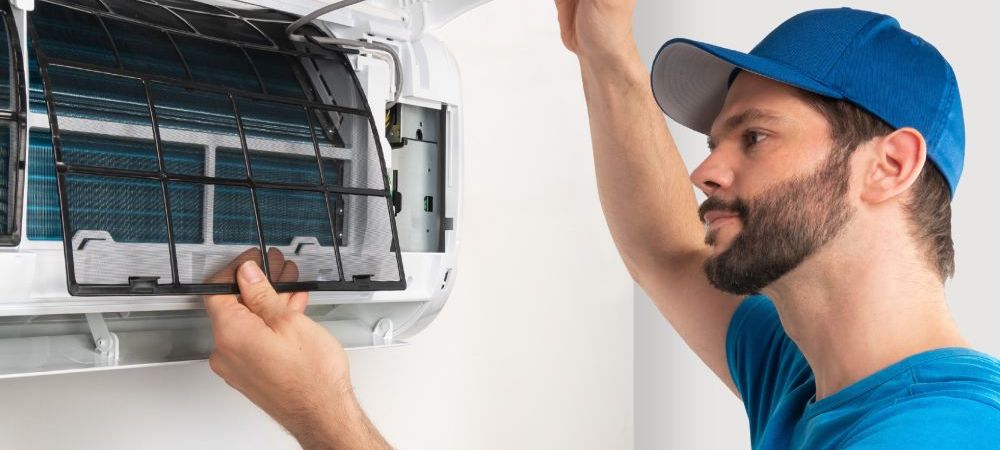
This is the single most impactful thing most homeowners can do for their AC system, yet it is also the most commonly neglected task. A clogged air filter restricts airflow across your evaporator coil. When airflow is restricted, the coil cannot absorb heat from the air efficiently. Your system runs longer, works harder, and consumes more electricity to deliver less cooling. In severe cases, restricted airflow causes the coil to freeze, which can lead to compressor damage, the most expensive repair in residential HVAC.
What to do: Check your filter before the cooling season begins, typically in late March or early April. For standard 1-inch filters, replace monthly during peak cooling season. If you have a high-efficiency 4- to 5-inch media filter, plan for replacement every 6 to 12 months. Households with pets or allergy sufferers should replace more frequently.
If you are unsure which filter type your system requires, the team at Rescue Heat & Air can assess your system during a seasonal maintenance visit and recommend the right filtration option for your home.
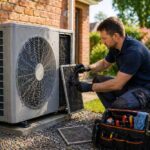
Step 2: Clean and Clear the Outdoor Condenser Unit
Your outdoor condenser unit works by pulling outside air across refrigerant coils to release the heat extracted from inside your home. When the unit is surrounded by debris, blocked by overgrown vegetation, or coated in dirt and grime, it cannot release heat efficiently. This condition, called high head pressure, forces your compressor to work harder and increases the risk of a shutdown or premature failure.
What to do:
- Turn off power to the unit at the disconnect box before doing any cleaning
- Remove any leaves, grass clippings, and debris from around the unit
- Trim vegetation back at least 18 to 24 inches on all sides and 5 feet above
- Gently rinse the exterior coil fins with a garden hose, spraying from the inside out if possible
- Straighten any bent fins with a fin comb if you notice damage
- Never use a pressure washer on the coil fins, as the high pressure will damage them
Oklahoma’s spring storms deposit a surprising amount of debris, pollen, and cottonwood into condenser units. If your unit has been covered during winter, check underneath the cover for any nesting animals or accumulated moisture before the season begins.
Step 3: Check and Clean Your Indoor Evaporator Coil and Drain Line
The evaporator coil sits inside your air handler and is responsible for actually cooling the air that circulates through your home. Over the course of a heating season, dust and organic material can accumulate on the coil surface, reducing its ability to absorb heat. A dirty evaporator coil is less efficient, encourages microbial growth, and can contribute to poor indoor air quality.
Your condensate drain line removes the moisture your AC pulls from the indoor air. In Oklahoma’s humid summer months, this line can handle a significant volume of water daily. Algae and mold love to grow in the dark, moist environment inside the drain line, and a clog can cause water to back up and overflow, potentially damaging your ceiling, walls, or flooring.
What to do: Pour a cup of diluted white vinegar or a condensate drain treatment tablet down the drain line access port every spring and monthly throughout the summer. If you notice water pooling near your air handler or a musty smell from your vents, call a technician to clear the blockage. Rescue Heat & Air handles AC maintenance that includes evaporator coil inspection and drain line treatment as part of a complete tune-up.
Step 4: Test Your Thermostat
Your thermostat is the brain of your HVAC system. A miscalibrated thermostat means your system runs too long, short-cycles, or fails to maintain your desired temperature, wasting energy and adding wear on components.
What to do:
- Set your thermostat to cool mode and lower the set point below current room temperature
- Confirm the system starts within a few minutes and that cool air is flowing from the vents
- Check that the temperature reading on the thermostat matches a separate thermometer placed nearby
- If you have an older manual or programmable thermostat, consider upgrading to a smart thermostat before summer
Smart thermostats like the Ecobee or Nest Learning Thermostat can reduce cooling costs by 10 to 15 percent by learning your schedule and optimizing run times. They also give you remote control from your phone, which is particularly valuable when Oklahoma temperatures spike unexpectedly during a trip or workday.
Step 5: Inspect Your Ductwork for Leaks and Damage
The U.S. Department of Energy estimates that the typical home loses 20 to 30 percent of conditioned air through leaky ducts. In an Oklahoma summer, losing that much cooled air into your attic or crawlspace can add hundreds of dollars to your seasonal energy bill and leave rooms feeling stuffy regardless of how low you set the thermostat.
What to look for:
- Rooms that feel noticeably warmer than others, even when the system runs continuously
- Higher than normal utility bills compared to the same period in prior years
- Visible gaps, loose connections, or sections of duct that have separated or collapsed
- Dust rings or streaks around registers and return air grilles
Sealing and insulating ductwork in unconditioned spaces like attics is one of the highest-return HVAC improvements available to Oklahoma homeowners. A qualified technician can perform a duct pressure test to quantify leakage before recommending the most cost-effective repairs.
Step 6: Check Refrigerant Levels
Refrigerant is the substance that makes cooling physically possible. It cycles between your outdoor condenser and indoor evaporator coil, absorbing heat from your home and releasing it outside. When refrigerant is low, typically due to a leak rather than simple consumption, your system cannot cool effectively no matter how long it runs.
Signs of low refrigerant include warm air blowing from vents despite the system running, ice forming on the refrigerant lines or evaporator coil, a hissing or bubbling noise near the outdoor unit, and a sudden spike in your electricity bill without an obvious cause.
Important: Refrigerant handling requires EPA certification and specialized equipment. This is not a DIY task. A licensed technician will check operating pressures, identify any leak points, and add the correct charge if needed. Simply adding refrigerant without finding and repairing the leak is a temporary fix that will not hold through the season.
Rescue Heat & Air technicians are NATE-certified and fully equipped to diagnose refrigerant issues during your spring AC tune-up in Claremore or anywhere across our service territory.
Step 7: Schedule a Professional AC Tune-Up
All the DIY preparation steps above are valuable, but they do not replace a comprehensive professional inspection. A licensed HVAC technician has the tools, training, and diagnostic equipment to identify developing problems before they become expensive failures.
A professional spring AC tune-up from Rescue Heat & Air includes:
- Measuring refrigerant charge and checking for leaks
- Inspecting and cleaning the evaporator and condenser coils
- Testing electrical components, including capacitors, contactors, and wiring connections
- Measuring amperage draws on the compressor and fan motors
- Lubricating moving parts
- Verifying thermostat calibration and system controls
- Clearing and testing the condensate drain
- Checking system static pressure and airflow
Industry Data:
The Air Conditioning Contractors of America (ACCA) reports that a properly maintained AC system uses 15 to 25 percent less energy than a neglected one and can add 5 to 10 years to the system’s operational lifespan.
When to Consider AC Replacement Instead of Another Repair
Not every aging Oklahoma AC system deserves another summer. If your system is approaching or past 12 to 15 years of age, is requiring increasingly frequent repairs, or is operating on the older R-22 refrigerant (which is no longer manufactured and is extremely expensive to source), replacement is often the smarter financial decision.
The industry rule of thumb is the 5,000 rule: multiply the age of the system by the cost of the repair. If the result exceeds 5,000, replacement is generally more cost-effective. A newer system will also carry a manufacturer warranty, qualify for potential energy tax credits, and run on the more environmentally responsible R-410A or R-32 refrigerant.
Rescue Heat & Air offers professional AC installation services in Claremore and across northeast Oklahoma, including honest assessments of whether your current system deserves repair or replacement. We also offer HVAC financing in Oklahoma to make a new system more accessible for homeowners and businesses on a budget.
Oklahoma-Specific Considerations: Humidity, Storms, and Extreme Heat
Preparing your AC for an Oklahoma summer means accounting for more than just high temperatures. The region’s weather patterns create several unique challenges:
High Humidity
When the humidity is high, your AC must remove more moisture from the air in addition to reducing temperature. An oversized system that short-cycles will not run long enough to dehumidify properly, leaving your home feeling clammy even at a comfortable temperature. Proper system sizing, ideally calculated using ACCA Manual J load calculations, is critical for Oklahoma homes.
Severe Spring Storms
Oklahoma’s tornado and hail season overlaps with the start of cooling season. A large hail event can severely damage condenser coil fins and reduce system efficiency immediately. After any significant storm, walk your outdoor unit and look for obvious fin damage, debris lodged in the coil, or physical damage to refrigerant lines. Schedule a post-storm inspection if you have any concerns.
Power Surges
Summer thunderstorms bring lightning and power fluctuations that can damage the sensitive electronics in modern HVAC control boards and variable-speed components. A whole-home surge protector and a dedicated surge protector on your outdoor unit are cost-effective insurance policies in Oklahoma’s storm-prone environment.
A Simple Pre-Summer AC Checklist for Oklahoma Homeowners
- March or April: Replace air filter, inspect outdoor unit, schedule professional tune-up
- Before first hot day: Test cooling mode, verify thermostat accuracy, check condensate drain
- Monthly during summer: Check and replace filter if needed, treat condensate drain line
- After severe storms: Inspect outdoor unit for hail or debris damage
- Late summer: Review system performance and energy bills for signs of declining efficiency
Ready to Schedule Your Spring AC Tune-Up?
Rescue Heat & Air serves Claremore, Tulsa, Broken Arrow, Owasso, Catoosa, Pryor, and all of northeast Oklahoma. Our NATE-certified technicians will prepare your system for the long Oklahoma summer with a thorough inspection, cleaning, and performance verification. Do not wait until the first heat wave to find out your system is struggling. Book your tune-up today.
Final Thoughts
Oklahoma summers are relentless, but a well-prepared AC system is more than capable of keeping your home comfortable through even the hottest stretches. The steps outlined in this guide, from changing your filter and cleaning the outdoor unit to scheduling a professional tune-up and inspecting your ductwork, give your system the best possible foundation for the season ahead.
For more guidance on getting the most from your heating and cooling system year-round, explore our HVAC services in Oklahoma or read our guide on heating maintenance services to keep your entire system in top shape across every season.
Related Posts You May Find Helpful
If this guide helped you prepare for summer, these resources cover related topics that Oklahoma homeowners and decision-makers frequently need throughout the year.
- Common Heating Issues in Fall and How to Fix Them – Summer ends and fall arrives fast in Oklahoma. This guide covers the eight most common furnace and heating system problems Oklahoma homeowners face in October and November, with clear guidance on what you can fix yourself and when to call a technician.
- AC Repair Services in Claremore and Northeast Oklahoma – Even a well-prepared system can develop mid-season issues. Learn what to expect from a professional AC repair call, what the most common mid-summer failures look like, and how Rescue Heat and Air delivers fast diagnosis and repair across the region.
- AC Maintenance Services: What a Professional Tune-Up Actually Includes – Wondering exactly what a technician checks during a seasonal AC tune-up? This page breaks down every component of a Rescue Heat and Air maintenance visit so you know precisely what you are investing in and why each step matters.
- HVAC Financing Options in Oklahoma – If your aging AC system needs replacement rather than another repair, this page covers the financing programs Rescue Heat and Air offers to help Oklahoma homeowners and businesses manage the cost of a new high-efficiency system with flexible monthly payments.
- Heating Services in Claremore: Full-Season HVAC Coverage – Once summer ends, your heating system takes over. This overview of Rescue Heat and Air heating services covers everything from furnace installation and repair to annual maintenance plans designed to keep northeast Oklahoma homes and businesses warm through every cold snap.